

What is the water resistance of slash proof fabric?
As a supplier of slash proof fabric, I often get asked about the various properties of our products, and one question that comes up quite frequently is about the water resistance of slash proof fabric. In this blog post, I'll delve into this topic to provide you with a comprehensive understanding of what water resistance means in the context of slash proof fabric and how it impacts its performance.
Understanding Slash Proof Fabric
Before we discuss water resistance, let's briefly go over what slash proof fabric is. Slash proof fabric is designed to protect against cuts and slashes, typically in high - risk environments such as industrial workplaces, security operations, and some sports activities. These fabrics are usually made from high - strength materials like UHMWPE (Ultra - High - Molecular - Weight Polyethylene), aramid fibers, or a combination of different fibers.
The primary function of slash proof fabric is to prevent sharp objects from cutting through the material and reaching the skin or body parts underneath. This is achieved through the fabric's structure and the inherent strength of the fibers used. For example, Cut Resistant UHMWPE Fabric is known for its excellent cut - resistant properties due to the high tenacity of UHMWPE fibers.
Water Resistance Defined
Water resistance in the context of slash proof fabric refers to the fabric's ability to resist the penetration of water. It is different from waterproofing. A water - resistant fabric will slow down the passage of water through it, but it may still allow some water to seep in over time or under certain conditions. On the other hand, a waterproof fabric completely prevents water from passing through.
The level of water resistance can be measured in several ways. One common method is the hydrostatic head test. In this test, a column of water is placed on top of the fabric, and the height of the water column at which water first starts to penetrate the fabric is measured. The higher the hydrostatic head value, the more water - resistant the fabric is.
Factors Affecting Water Resistance of Slash Proof Fabric
Fiber Type
Different fibers have different levels of natural water resistance. For instance, UHMWPE fibers have a relatively low affinity for water, which means they do not absorb water easily. This gives fabrics made from UHMWPE a certain degree of inherent water resistance. Aramid fibers, while strong and cut - resistant, are more hydrophilic (water - loving) compared to UHMWPE. They can absorb some amount of water, which may reduce their performance slightly in wet conditions.

Fabric Construction
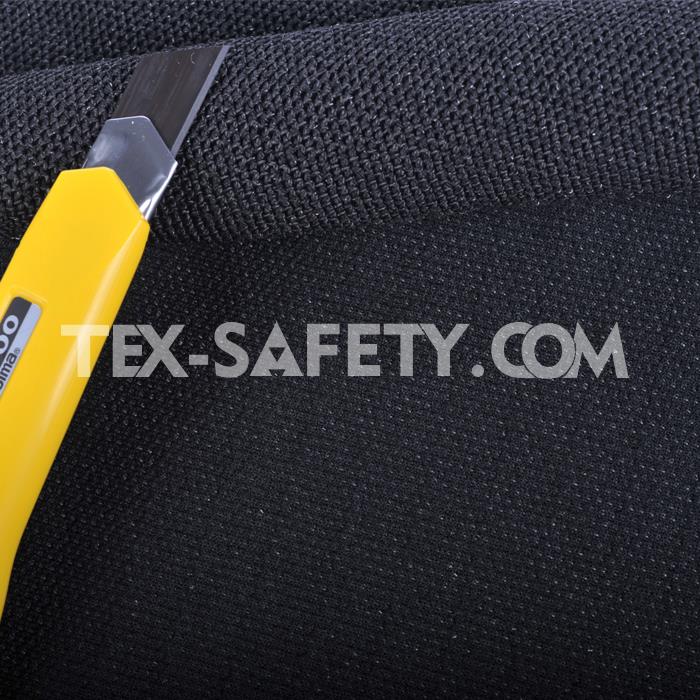
The way the fabric is constructed also plays a crucial role in its water resistance. A tightly woven fabric with a high thread count is generally more water - resistant than a loosely woven one. The tight weave creates a physical barrier that makes it more difficult for water to penetrate. Additionally, the use of special weaving techniques or the addition of extra layers can enhance the water - resistant properties of the fabric.
Surface Treatments
Many slash proof fabrics are treated with water - repellent coatings. These coatings work by reducing the surface tension of the fabric, causing water to bead up and roll off rather than being absorbed. Common water - repellent treatments include fluoropolymer - based coatings, which can significantly improve the water resistance of the fabric. However, these treatments may wear off over time with use and washing, so the water - resistant performance may degrade.
Impact of Water on Slash Proof Performance
When slash proof fabric gets wet, its performance can be affected in several ways. First, if the fabric absorbs water, it may become heavier. This added weight can make the fabric feel cumbersome and may affect the mobility of the person wearing it.
Second, in some cases, the absorption of water can reduce the strength of the fibers. For example, aramid fibers may experience a slight reduction in their tensile strength when wet. This means that the cut - resistant and slash - resistant properties of the fabric may be compromised to some extent.
However, it's important to note that high - quality slash proof fabrics are designed to maintain a reasonable level of performance even in wet conditions. Puncture Resistant Fabric and Slash And Cut Resistant Fabric For Workwear And Gloves are engineered to withstand a range of environmental factors, including moisture.
Applications and Considerations
The water resistance of slash proof fabric is an important consideration for different applications. In outdoor industrial work, where workers may be exposed to rain or wet conditions, water - resistant slash proof fabric can provide both protection and comfort. For security personnel who are on duty in all weather conditions, having water - resistant gear is essential to ensure continuous protection.
In sports such as fencing or martial arts, where sweat and possible exposure to water are common, water - resistant slash proof fabric can help keep the athletes dry and comfortable.
When choosing a slash proof fabric, it's important to consider the expected level of water exposure. If the fabric will be used in extremely wet conditions, a higher level of water resistance may be required. However, it's also important to balance the need for water resistance with other factors such as breathability, flexibility, and cost.
Conclusion
In conclusion, the water resistance of slash proof fabric is an important property that can impact its performance and usability. It is influenced by factors such as fiber type, fabric construction, and surface treatments. While water can have some impact on the slash - resistant performance of the fabric, high - quality materials and proper design can minimize these effects.
As a supplier of slash proof fabric, we understand the importance of providing products that meet the diverse needs of our customers. Whether you need a fabric with high water resistance for outdoor work or a breathable yet cut - resistant fabric for sports, we have a range of options to choose from.
If you're interested in learning more about our slash proof fabrics or are looking to make a purchase, we encourage you to reach out to us. We'd be happy to discuss your specific requirements and help you find the perfect fabric solution for your needs.
References
- ASTM International standards on textile testing for water resistance
- Technical literature from fiber manufacturers on the properties of UHMWPE and aramid fibers
- Research papers on the performance of protective fabrics in wet conditions